
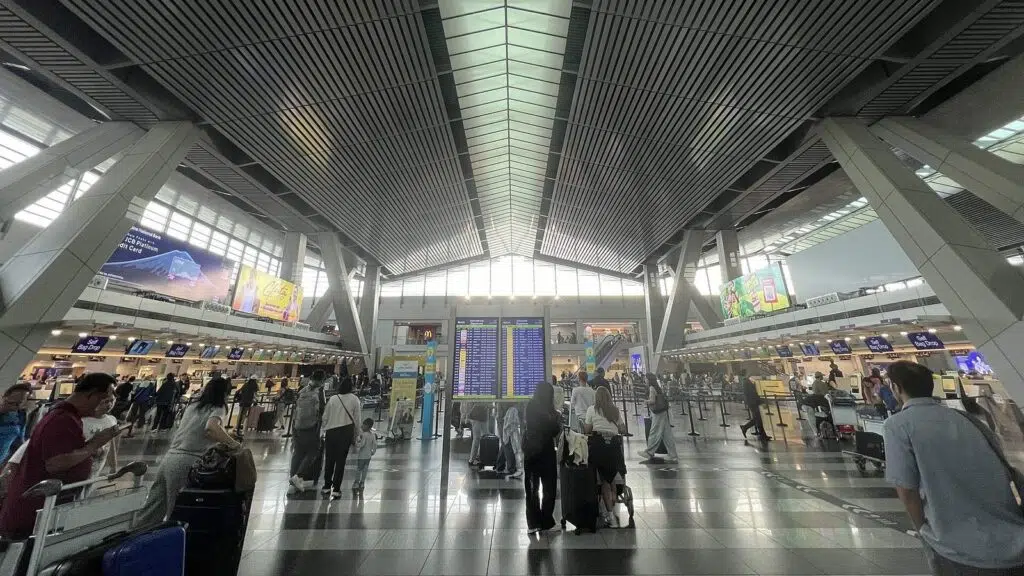
You get the notification, you drop everything, you fight the queue, and you win. Manila to Cebu, base fare PHP 1. Then you reach the payment screen and the number says PHP 903. You did nothing wrong. That is what a piso fare costs.
The gap is not a trick and it is not hidden, exactly. It is just that no airline, no blog and no aggregator adds it up for you in one place, so most Filipinos only find out at checkout. This guide does the arithmetic: the piso fare total cost for one domestic seat and one international seat, line by line, every figure sourced and dated. It also names the one line item nobody can quote you in advance, because being honest about that is more useful than pretending the total is knowable to the peso.
All figures checked 21 September 2026.
Some links here are affiliate links. If you book through one, we earn a small commission at no extra cost to you, and it keeps this site running. We only link to merchants we would use ourselves.
The short answer: two receipts
Both assume a PHP 1 promo base fare, one passenger, one way, departing from NAIA.
Manila to Cebu, domestic
| Line | Amount |
|---|---|
| Base fare | PHP 1 |
| Fuel surcharge (CAB Level 14) | PHP 457 |
| 12% VAT on fare and surcharge | PHP 55 |
| NAIA domestic passenger service charge | PHP 390 |
| Admin fee | charged, amount not published |
| Running total, carry-on only | about PHP 903 |
| Prepaid 20kg checked bag | PHP 1,000 |
| Total with one bag | about PHP 1,903 |
Manila to Singapore, international
| Line | Amount |
|---|---|
| Base fare | PHP 1 |
| Fuel surcharge (CAB Level 14, bottom of the band) | PHP 1,509 |
| VAT | zero-rated |
| NAIA international passenger service charge | PHP 950 |
| Philippine travel tax, economy | PHP 1,620 |
| Admin fee | charged, amount not published |
| Running total, carry-on only | about PHP 4,080 |
| Prepaid 20kg checked bag | PHP 2,000 |
| Total with one bag | about PHP 6,080 |
Read those as floors, not quotes. Every figure is either the published rate or the bottom of a published band, and the admin fee is on top of both. The honest headline is that a PHP 1 seat to Singapore costs about four thousand pesos before you pack anything.
Compare all-in fares from Manila on Trip.com
The fuel surcharge is the biggest line, and it moves every 15 days
On a domestic piso fare, the fuel surcharge is roughly half the bill. On an international one it is more than a third. It is also the line most people have never heard of.
The Civil Aeronautics Board sets it, not the airline. It works as a numbered level, and since March 2026 the CAB has revised it every 15 days instead of monthly, to track jet fuel prices more closely.
For 16 to 30 September 2026 the level is 14. That puts domestic surcharges at PHP 457 to PHP 1,336 per passenger depending on distance, and international ones at PHP 1,509.08 to PHP 11,220.71 for flights originating in the Philippines. In the first half of September it was Level 13: PHP 423 to PHP 1,237 domestic, PHP 1,396.74 to PHP 10,385.42 international. So the same seat moved by about PHP 34 domestic and PHP 112 international between two halves of one month.
Two practical consequences. First, the piso fare you compute today is not the piso fare next fortnight, and neither is anyone else’s. Second, the CAB publishes a band rather than a per-route figure, so the exact amount for your specific route sits somewhere inside it. Short hops sit near the bottom, which is why the Singapore receipt above uses PHP 1,509 and why it is a floor.
If you want the current number before you commit, the CAB publishes each advisory on its own site, and the level changes on the 1st and the 16th of every month.
The terminal fee depends on who runs your airport
This one genuinely surprises people, because the answer changed twice in a year and it is different depending on where you take off from.
NAIA is run by New NAIA Infra Corp under a public-private partnership. Its passenger service charge rose on 14 September 2025, the first change in about two decades: international went from PHP 550 to PHP 950, domestic from PHP 200 to PHP 390. It is normally collected inside your ticket rather than at a counter. Overseas Filipino workers remain exempt from the international terminal fee, which is worth knowing if you are flying out on an OFW passport and no one at the booking screen mentions it.

CAAP-run airports went the other way. From 1 April 2026 the Civil Aviation Authority of the Philippines cut its charges to help offset rising fuel costs: international from PHP 900 to PHP 700, domestic at its international airports from PHP 350 to PHP 150-200, Principal Class 1 airports from PHP 300 to PHP 150-200, Principal Class 2 from PHP 200 to PHP 100, and community airports from PHP 100 to PHP 50.
The catch is which airports are which. The CAAP reduction explicitly excludes every airport under a public-private partnership, which means NAIA, Mactan-Cebu, Clark, Cagayan de Oro and Bohol-Panglao all keep their own rates. If you fly out of Iloilo, Bacolod or Tacloban you pay the lower CAAP figure. If you fly out of Manila or Cebu you do not.
One caveat worth stating plainly: the CAAP cut was announced for an initial three months from 1 April 2026, subject to review. Cebu Pacific’s own fee page still presents those reduced figures as current, which is good evidence they are still in force, but we have not found a government notice confirming the extension. Check your booking summary rather than assuming, and treat the reduced numbers as likely rather than certain.
The travel tax is not in your ticket at all
For international departures there is one more charge, and unlike the terminal fee it is usually not bundled into the fare. You pay the Philippine travel tax separately, at a counter at the airport or online beforehand.
Economy is PHP 1,620. First class is PHP 2,700. A reduced economy rate of PHP 810 applies to certain travellers, including qualifying dependents of overseas Filipino workers, and full exemptions exist too.
That single line is 40 percent of the international receipt above. It is also the one most likely to catch out a first-time traveller who budgeted from the fare screen alone and arrives at NAIA with exactly enough for a taxi. Our guide to Philippine travel tax and terminal fees covers the exemption categories and how to claim a refund if you paid when you did not have to.
The bag is where a cheap fare stops being cheap
A piso fare buys you a seat and a carry-on. Nothing else.
Cebu Pacific’s published prepaid rates for a 20kg checked bag are PHP 1,000 domestic, PHP 2,000 international short haul and PHP 3,000 international long haul. Buy the same 20kg at the airport counter instead and it is PHP 2,500 domestic, PHP 3,500 international short haul and PHP 6,000 long haul.

Sit with that for a second. On a domestic piso fare, deciding at the airport rather than at booking costs PHP 1,500, which is more than everything else on the receipt combined. It is the single most expensive mistake available to you in this entire transaction, and it takes thirty seconds at checkout to avoid.
Excess beyond your prepaid allowance is charged per kilo: PHP 700 domestic, PHP 1,100 international short haul, PHP 1,700 long haul. Which is why the balikbayan box exists.
The one line nobody can quote you
Every breakdown you will read, including this one, has a gap in it. The airline charges an admin fee for booking through its digital channels, and it does not publish the amount. Cebu Pacific’s own service fees page names the fee, says it applies, and tells you the cost will appear in your booking summary. The same goes for the infant fee.
So the totals above are complete except for one line that only materialises at checkout. That is not an accusation of anything sneaky, it is just how the airline has chosen to present it, and it is the reason nobody can hand you an exact all-in figure for a promo fare in advance.
Worth knowing about VAT while we are here, because it interacts with all of this. Domestic tickets carry 12 percent VAT, computed on the base fare, the fuel surcharge and the admin fee. International transport out of the Philippines is zero-rated. Government charges, meaning the terminal fee and the travel tax, sit outside the VAT base in both cases. That is why the domestic receipt has a VAT line and the international one does not, even though the international total is four times larger.
So is a piso fare still worth it?
Usually yes, and the arithmetic says why. PHP 903 to Cebu is a real bargain against a monthly average of PHP 1,156 one way on that route, and PHP 4,080 to Singapore is well under the PHP 4,703 that the cheapest ordinary fare was showing when we last checked. The saving is genuine. It is just smaller and later than the headline implies. If you want to sanity-check a promo against the ordinary price, look up what Manila to Cebu is going for right now and compare it with the receipt above.
Two things change whether it is worth it for you.
Promo fares are the least flexible product the airline sells. Rebooking fees, fare difference and the change deadline all apply, and on the cheapest bucket they apply hardest. Read how to change flights or get refunds on Cebu Pacific before you buy, not after your plans shift. For anything further out than a weekend, cover that includes trip interruption is a reasonable hedge against a non-refundable ticket, and SafetyWing’s Nomad Insurance is what we use.
The travel period is the real constraint. Sales are usually bookable for three days and flyable months later, often in the following year’s quiet months. A piso fare you cannot use is not cheap. Our post on when to book Christmas flights from the Philippines goes through how those windows tend to fall, and the wider booking-window guide covers the rest of the year.
The fare is rarely the biggest line in the trip
Winning a piso fare feels like winning the trip. It is not. Four nights in Cebu will cost more than the flight did, whatever you paid for it, and the fare is the one line you have already finished negotiating.

So once the seat is locked, spend the same attention on the room. Compare what places in Cebu actually cost before you congratulate yourself too hard, because a PHP 903 flight into a PHP 4,000 a night hotel is not a budget trip.
Sort connectivity early too. An Airalo eSIM bought calmly at home costs a fraction of Globe or Smart roaming and spares you buying data on airport wifi with a queue behind you.
And if you are flying internationally on an OFW passport, check the terminal fee exemption before you pay anything. It is real money and the booking flow will not remind you. The OFW lounge at NAIA Terminal 3 is another entitlement in the same category.
FAQ
Is the piso fare really PHP 1?
The base fare is. The base fare is one line out of five or six. Everything else on the ticket, the fuel surcharge, VAT, the terminal fee and the admin fee, is charged at the normal rate, which is why a PHP 1 domestic seat totals around PHP 903.
Why is the international piso fare so much more than the domestic one?
Three reasons stack up. The international fuel surcharge starts at PHP 1,509 against PHP 457 domestic, the NAIA terminal fee is PHP 950 against PHP 390, and the travel tax of PHP 1,620 does not exist on domestic flights at all.
Do I pay the travel tax separately or is it in my ticket?
Separately, in most cases. It is not normally bundled into the fare, so budget PHP 1,620 economy on top of whatever your booking says, unless you qualify for the reduced PHP 810 rate or an exemption.
Is the terminal fee included in the ticket?
At NAIA it normally is. That is different from the travel tax, which normally is not. Two government-related charges, two different collection methods, which is exactly why people get caught out.
How much is the checked bag?
PHP 1,000 for 20kg domestic and PHP 2,000 international short haul if you buy it when you book. PHP 2,500 and PHP 3,500 if you buy it at the airport. Buy it at booking.
Can I get the fuel surcharge waived?
No. It is set by the Civil Aeronautics Board, applies to all carriers, and changes on the 1st and the 16th of each month. The only way to pay less is to fly a shorter route or fly when the level is lower.
The short version
A PHP 1 fare is a real discount on one line of a six-line bill. Domestic, expect about PHP 900 with a carry-on and about PHP 1,900 with a bag. International short haul, expect about PHP 4,000 and about PHP 6,000. Buy your baggage at checkout, never at the airport. Budget the travel tax separately. And if the seat sale only flies in a month you cannot travel, let it go, because the cheapest ticket in the country is still the one you actually use.
About the Author
Bianca Rei is a Filipino traveler, entrepreneur, and problem-solver who has called Serbia home for many years. She has been following Two Monkeys Travel Group since 2014, back when she was simply a reader dreaming, traveling, and collecting stories of her own, so being able to contribute to the blog now feels a little like coming full circle.
Bianca runs Rodi Solutions, where she helps people and businesses navigate life and business in Serbia, alongside website design, development, and management. When she is not working, she is usually traveling, boxing, chasing another adventure, or spending time with her family.
Find her work at rodi.consulting, or get to know her beyond work at biancarei.net.