
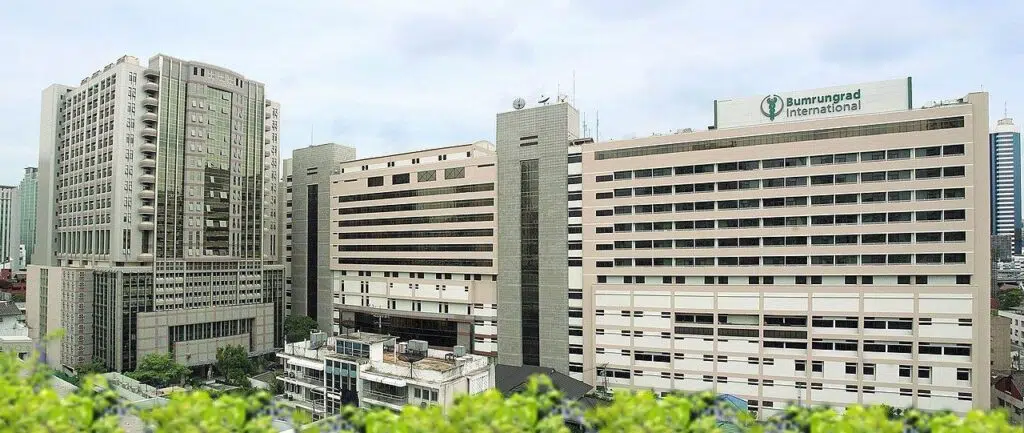
A Filipino developer I know spent four nights in a Bangkok hospital last year after a scooter clipped him on Sukhumvit. The bill came to about 380,000 baht, roughly PHP 660,000. He had PhilHealth. He had a travel policy he bought online before he flew out, eight months earlier. Neither one paid the hospital. He put it on two credit cards and a GCash loan from his sister.
None of that had to happen. He was not uninsured, exactly. He was insured for a different situation than the one he was living in.
Travel insurance for Filipino digital nomads is genuinely different from travel insurance for a Filipino tourist, and almost nothing written online explains the difference for a Philippine passport holder. This guide covers what PhilHealth pays when you are hospitalized overseas, whether OWWA applies to you at all, why the policy you bought in Manila quietly stops working around day 90, and what a nomad policy really covers once you read past the marketing page. All figures are in the original currency plus pesos, converted at PHP 62.87 to the dollar and PHP 72.62 to the euro, the European Central Bank reference rates for 14 September 2026.
Some links below are affiliate links. If you buy through one, we earn a small commission at no extra cost to you, and it keeps this site running. We only link to things we would tell a friend to use.
The short answer: you have three layers, not one
Most Filipinos abroad think of insurance as one thing they either have or do not have. It is actually three separate systems that pay for different things, and the gaps between them are where people get hurt financially.
Layer one, PhilHealth. It does follow you overseas, which surprises most people. It reimburses you after the fact, at Philippine rates, and it is nowhere near enough on its own.
Layer two, OWWA. Real money for repatriation, disability and death, but only if you are an OFW with a contract processed by the Department of Migrant Workers. Most freelancers and remote employees are not.
Layer three, private cover. This is the layer that actually pays a foreign hospital. A Philippine travel policy works for a two-week trip. For anything longer, you need a nomad policy that renews.
Here is the same thing as a worked example. Say you are hospitalized in Bangkok with a bill of USD 12,000, about PHP 754,000. PhilHealth might reimburse you somewhere in the range of PHP 20,000 to PHP 50,000 depending on the case rate, months later, after you file. OWWA pays nothing toward a hospital bill in that situation. A nomad policy with a USD 250 deductible pays the remaining balance, up to its limit, and can often be billed directly. That is the whole argument in one paragraph.
PhilHealth abroad: what it actually pays
PhilHealth does cover confinement overseas. The current rule sits in PhilHealth Advisory 2026-0042, signed 21 July 2026, which states that OFWs and their dependents, wherever they are abroad, can claim reimbursement for overseas confinements. Claims must be filed within 180 days of your discharge date.
Two things about that sentence matter more than the sentence itself.
First, it is reimbursement at the applicable PhilHealth All Case Rate. The case rate is calculated for a Philippine hospital. Pneumonia in a Manila ward and pneumonia in a Singapore private hospital get the same case rate, and the gap between that rate and a Singapore bill is yours. It is a national scheme doing what it was built to do, which is pay Philippine prices.
Second, your contributions have to be current. Direct contributors, including OFWs, pay 5 percent of monthly income, with a floor of PHP 500 a month. On a PHP 30,000 declared monthly income that is PHP 1,500 a month, and on PHP 100,000 it is PHP 5,000. You can pay monthly, quarterly, semi-annually or annually through accredited collecting agents locally and overseas. If you let it lapse while you were busy moving countries, the claim gets messy. Check your posted contributions in the Member Portal or the eGov PH app before you need them, not after. Our guide to mandatory PhilHealth contributions for OFWs walks through the payment side in detail.
Keep every original receipt, the medical abstract, and the discharge summary. A foreign hospital will not reissue them a year later because a Philippine agency asked.

OWWA: who it covers, and who it quietly does not
This is where a lot of remote workers get a nasty surprise, so read this section even if you think it does not apply.
OWWA membership costs USD 25, about PHP 1,572, and runs for two years. The benefits are real: PHP 100,000 for natural death, PHP 200,000 for accidental death, PHP 20,000 burial assistance, up to PHP 100,000 for dismemberment, plus repatriation assistance for workers in distress during war, unrest or disaster. Nothing private insurance sells at that price comes close on the death and repatriation side.
The catch is eligibility. First-time membership requires an employment contract verified by the Department of Migrant Workers and a work visa from your destination country whose details match that contract. If you are a Filipino freelancer in Chiang Mai billing clients in Australia, or a remote employee of a Manila company working from Lisbon on a nomad visa, you almost certainly do not have a DMW-verified overseas contract, which means you are not an OFW in the legal sense and OWWA is not your safety net.
The word OFW gets used loosely in conversation and very precisely in a claims office. If you think you might qualify through another route, ask the Migrant Workers Office nearest you rather than assuming. It is free to ask.
Why your Philippine travel policy stops working when you stay too long
Philippine travel insurance is built around a round trip. You leave, you come back, the policy ends. That design is invisible until you stop coming back.
Single-trip plans from Philippine insurers typically run to a maximum of 180 days. Pacific Cross Bon Voyage single-trip plans cover 5 to 180 days, with medical expense limits of USD 50,000 to USD 100,000 depending on plan tier. Oona’s single-trip plans run 1 to 180 days. Fine products, for a long holiday.
Annual multi-trip plans sound like the answer and usually are not. They give you unlimited trips in a year, but each individual trip is capped, commonly at 30, 45 or 90 days. Day 91 of a single continuous stay is day one of being uninsured, and nothing tells you. There is no email, no text, no notification. You simply stop being covered while continuing to believe you are.

The other problem is renewal. Most Philippine policies must be bought while you are in the Philippines, before departure. Once you are already in Vietnam and your 90 days are running out, the local market largely cannot help you. This is the actual reason nomad-specific insurance exists, and it is the gap that the older advice on this site, including our 2019 guide to choosing travel insurance as a Filipino, predates.
If that describes your situation, this is the point to price a subscription policy instead. See what SafetyWing Nomad Insurance costs for a three month stay before your current cover lapses, because buying while insured is simpler than buying while uninsured.
What a nomad policy covers, and what it quietly does not
I am going to use SafetyWing’s Nomad Insurance Essential here because it is the plan most Filipino nomads end up on and because its full Description of Coverage is public, which not every insurer can say. The numbers below come from that document, not from the sales page.
What you get. The overall limit is USD 250,000, about PHP 15.7 million, for everyone under 65, dropping to USD 100,000 for ages 65 to 69. The deductible is USD 250, roughly PHP 15,717, per certificate period, and after that the plan pays 100 percent of eligible expenses up to the limit. Emergency medical evacuation is covered up to USD 100,000 lifetime, around PHP 6.3 million, and is not subject to the deductible or the overall limit. Repatriation of remains is up to USD 20,000, about PHP 1.26 million. Trip interruption pays up to USD 5,000, roughly PHP 314,000. Lost checked luggage covers USD 3,000 per certificate period with a USD 500 per-item cap. Outside the United States there is no emergency room co-payment.
What is excluded, and this is the part worth ten minutes of your attention. Pre-existing conditions are excluded, except for an acute onset, which has its own conditions: it cannot be a chronic or congenital condition, treatment must be obtained within 24 hours of the sudden flare-up, you must be under 80, and you must be outside your home country. Mental health disorders are excluded outright. So is every form of cancer. So are all sexually transmitted infections, and HIV. Pregnancy is excluded except for defined complications, with nothing covered after the 26th week, and no routine prenatal care or childbirth. Routine medical examinations, annual check-ups, vaccinations and medical certificates are excluded, which catches people who assume insurance covers the medical certificate their visa renewal requires.
There is also an activity list. Amateur recreational sports are covered, but organized athletics with scheduled practice are not, and neither is anything done for pay. The excluded list names martial arts, boxing, quad biking, motorized dirt bikes, parachuting, paragliding, kite-surfing, and scuba beyond 10 metres without certification or a certified instructor, among others. If your version of a good weekend is on that list, read it before you buy rather than after you land.

None of this makes it a bad product. It makes it a travel medical policy rather than health insurance, and those are different things. Complete is the health insurance version, and other providers are worth comparing, which we do in our guide to health insurance Filipinos abroad can trust.
The home country trap: going home for Christmas
This one catches Filipinos specifically, because Filipinos go home.
Nomad Insurance includes Incidental Home Country Coverage, and the details matter. You must have purchased three months of coverage before it takes effect at all. For a non-US home country, which for us means the Philippines, eligible medical expenses incurred at home are covered up to a maximum of 30 days for every three-month period during which you are covered. Any unused allowance does not roll into the next period.
Picture the usual December. You land in Manila on 10 December and fly out on 20 January. That is 42 days at home. Roughly the first 30 are covered, the rest are not, and the gap lands exactly when you are eating lechon, driving to the province and staying up late.
There is a second clause people miss. Coverage is void if you return home for the sole purpose of getting treatment for something that started while you were traveling. A trip home is a trip home. A trip home to get the thing fixed is not covered.

Also worth knowing: the maximum duration of coverage under the policy is 364 days, with any extension at the insurer’s discretion. And if your policy ends while you are still being treated, the benefit period continues for up to 90 days, but only for the specific injury or illness that was diagnosed or treated while the certificate was active.
If a flare-up abroad does mean flying home early, trip interruption is the benefit that pays for it, up to that USD 5,000 ceiling. Check current Manila fares on Trip.com when you need a one-way at short notice, since that is usually when the price hurts most.
What all of this costs, in pesos
| Cover | Price | In PHP | What it is for |
|---|---|---|---|
| PhilHealth, minimum | PHP 500 per month | PHP 6,000 per year | Reimbursement at Philippine case rates |
| OWWA, if eligible | USD 25 per 2 years | PHP 1,572 | Death, disability, repatriation |
| SafetyWing Essential, 18 to 39 | USD 62.72 per 4 weeks | PHP 3,943 | Travel medical, the working layer |
| Same, three months | USD 188.16 | PHP 11,829 | A typical nomad stretch |
| SafetyWing Complete, 18 to 39 | USD 177.50 per month | PHP 11,159 | Actual health insurance |
| Deductible on a claim | USD 250 | PHP 15,717 | What you pay before it pays |
Read the bottom two rows together, because the honest version of this advice is that the deductible is four times the monthly premium. Nomad insurance is not for a PHP 3,000 clinic visit. It is for the PHP 660,000 night that ends a savings plan. Budget the premium as a fixed monthly line the same way you budget your eSIM, which is roughly how our post on budgeting a remote work lifestyle as a Filipino nomad frames it.
At PHP 3,943 per four weeks, the working layer costs less than most people’s monthly coffee spend in Bangkok. That is the comparison that usually settles it.
See what SafetyWing costs for your next three months
Before you go: what your visa needs, and what gets claims denied
Insurance is not only a safety decision for Filipinos. It is frequently a visa requirement, and the certificate has to say the right things.
The Schengen area requires medical cover of at least EUR 30,000, about PHP 2.18 million, valid across all Schengen states for the full stay. Serbian border officers can require insurance covering at least EUR 20,000, roughly PHP 1.45 million, and our Serbia visa guide for Filipinos covers what else they check at entry. Korea’s F-1-D nomad visa asks for KRW 100 million of cover, around PHP 4.67 million. Several of the programmes in our roundup of digital nomad visas Filipinos can actually get carry their own insurance thresholds, and the numbers are not interchangeable between countries.
The certificate usually has to name you, state the coverage amount in the currency the rules specify, state the validity dates covering the full stay, and confirm repatriation cover. A screenshot of a policy dashboard is not a certificate.
As for claims, the denials that actually happen to people are boring and preventable:
- Buying after the incident. You can buy Nomad Insurance while already abroad, but a condition that began before the policy started is not covered.
- No paper trail. Foreign hospitals discharge you fast. Ask for the itemized bill, the medical abstract and the diagnosis code before you leave the building.
- Treating it as health insurance. A dermatologist visit for a rash is not an emergency, and routine care is excluded.
- Alcohol. Injuries sustained while intoxicated, or while operating a vehicle at or above 0.08 blood alcohol, are excluded outright.
- Letting the policy lapse mid-trip. Subscription plans renew on a card. An expired card in a foreign country is a common and expensive way to become uninsured.
While you are sorting the paperwork, sort connectivity too, because a claim hotline is useless without data the moment you land. Get an Airalo eSIM for your destination and activate it before you leave Manila, so your first hour in a new country is not spent hunting for wifi.
FAQ
Does PhilHealth cover hospitalization abroad? Yes, through reimbursement. Per PhilHealth Advisory 2026-0042, OFWs and dependents abroad can claim for overseas confinement at the applicable All Case Rate, filed within 180 days of discharge. It pays Philippine rates, so treat it as partial recovery rather than cover.
Can I buy travel insurance if I am already abroad? With Philippine insurers, usually not. Nomad-specific policies including SafetyWing can be bought while you are already traveling, which is the main practical reason Filipinos switch to them. Check current SafetyWing pricing if you are already out and uninsured.
Do I still need PhilHealth if I have private insurance? Yes, if you intend to keep using Philippine hospitals when you visit, and contributions are mandatory for direct contributors anyway. The two layers pay in different places.
Is a Philippine annual multi-trip plan enough for a six-month stay? No. Annual plans cap each individual trip, commonly at 30, 45 or 90 days. A continuous six-month stay exceeds every one of those caps.
What about mental health? Nomad Insurance Essential excludes mental health disorders. If that matters to you, and for a lot of people working alone in a foreign country it does, look at SafetyWing Complete or a full international health plan instead.
Does my credit card insurance count? Rarely for a long stay. Card cover is usually tied to a return ticket paid with that card and to short trip lengths. Read the certificate, not the marketing page.
The honest summary
Insurance is the least interesting part of this life and the one that decides whether a bad week is a story or a debt. You need three things: PhilHealth contributions current so the reimbursement path stays open, OWWA if you actually qualify for it, and a subscription policy that does not quietly expire at day 90.
Set it up before you leave, not on the plane. Save the policy number offline, in a note you can open without wifi, and tell someone at home which insurer you are with. Then go work from somewhere better and think about it once a month, when the charge appears.
About the Author
Bianca Rei is a Filipino traveler, entrepreneur, and problem-solver who has called Serbia home for many years. She has been following Two Monkeys Travel Group since 2014, back when she was simply a reader dreaming, traveling, and collecting stories of her own, so being able to contribute to the blog now feels a little like coming full circle.
Bianca runs Rodi Solutions, where she helps people and businesses navigate life and business in Serbia, alongside website design, development, and management. When she is not working, she is usually traveling, boxing, chasing another adventure, or spending time with her family.
Find her work at rodi.consulting, or get to know her beyond work at biancarei.net.